Відмінний курс англійської! Ідеальне тренування вимови та морської термінології. Рекомендую всім морякам.
Ship Handling and Manoeuvring (EN)
- Formatonline and offline
- Duration4 days
- LanguageUkrainian, English, Russian
- Approved flags🇺🇦 Ukraine🇺🇸 America🇩🇲 Dominica
- Price9500₴
A manager opens the course. You cannot enroll yourself.
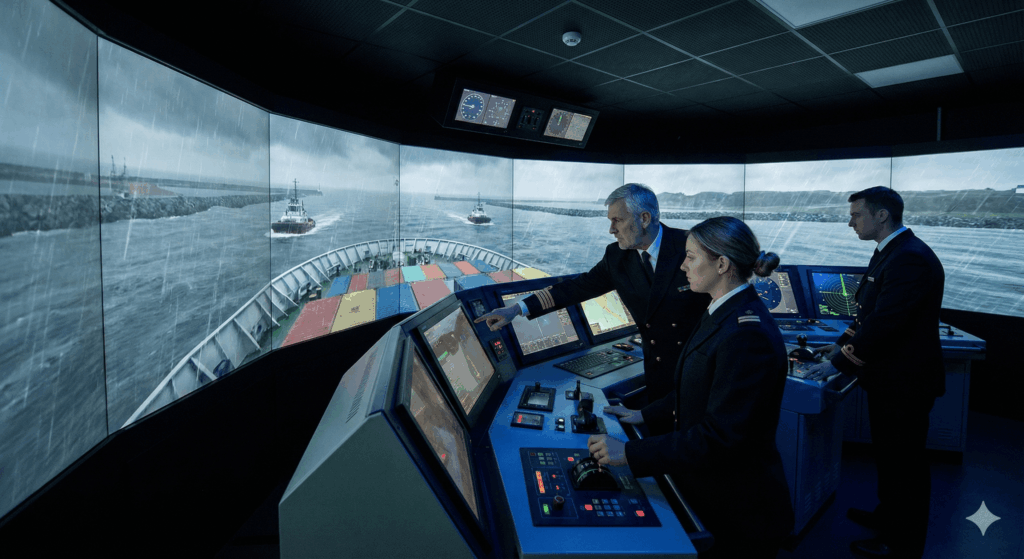
The "Ship Handling and Manoeuvring" course is designed for Masters, Chief Officers, navigation officers, and cadets preparing to stand watch on ships. AVANT Seafarers Training Centre, operating since 2003 with an official license from the Ministry of Education and Science of Ukraine, offers this course as one of the key programs for developing practical safe navigation skills.
The course has been developed in full compliance with the requirements of the International Convention on Standards of Training, Certification and Watchkeeping for Seafarers (STCW Convention) – Regulations I/12, sections A-I/12, paragraphs 1 and 2; A-II/1, A-II/2, B-I/12 (paragraphs 68, 69) of the STCW Code, the International Convention SOLAS 74 as amended, and in accordance with the recommendations of IMO Model Courses 1.22 "Ship Simulator and Bridge Teamwork", 7.01 "Master and Chief Mate", and 7.03 "Officer in Charge of a Navigational Watch". Ship handling and manoeuvring are critically important skills for any navigator, as proper manoeuvre execution determines the safety of the vessel, crew, cargo, port infrastructure, and the environment.
The course consists of 8 comprehensive modules covering all aspects of ship handling from theoretical manoeuvring fundamentals to practical skills in challenging conditions. Professional video lessons from experienced captain-instructors with extensive sea-going experience, supplementary training materials, and practical exercises will help you thoroughly master the art of ship navigation. Modules can be studied at your convenience from a computer, smartphone, or tablet. After watching each video lesson, be sure to click the Mark Complete button to proceed to the next lesson.
You will gain a deep understanding of vessel manoeuvrability principles, including the influence of inertial characteristics, propeller and rudder operation, the significance of trim and heel on vessel behaviour during various manoeuvres. You will master diverse manoeuvring techniques in confined waters, ports, during mooring and unmooring operations, and learn to control the vessel in different movement modes - ahead and astern, position holding. The course will teach you to perform complex manoeuvres: turning circles, stopping, pivot turning, drifting, and course keeping considering specific vessel type characteristics. You will gain practical skills in manoeuvring under restricted conditions - canals, harbours, narrows, approaches to berths in various configurations. You will learn to apply different mooring and unmooring techniques depending on weather conditions, currents, wind, and port configuration. The course covers professional interaction with pilots and tugs when manoeuvring large vessels in port, including proper communication and action coordination. You will develop skills in assessing hydrometeorological factors - wind, currents, waves, limited visibility - and their impact on vessel manoeuvrability. You will learn to effectively use ship simulators and navigation devices for situation assessment, safe manoeuvre planning, and making correct decisions in real time. The course aims to improve navigation safety, prevent accidents, vessel and port infrastructure damage, and environmental pollution.
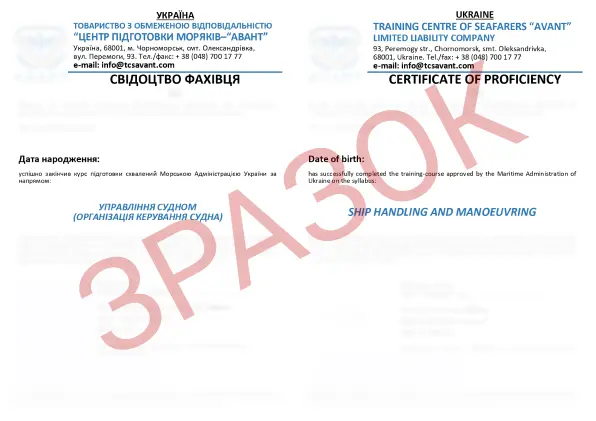
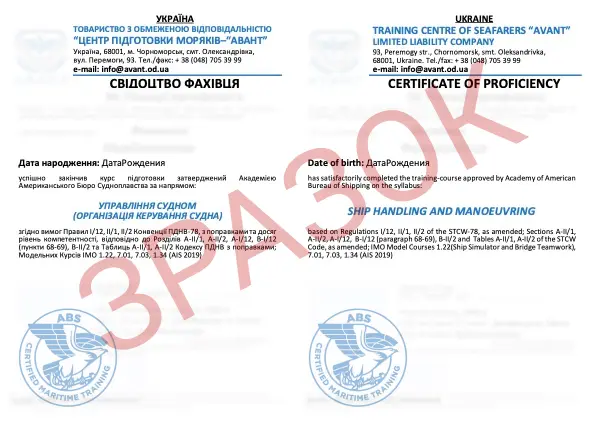
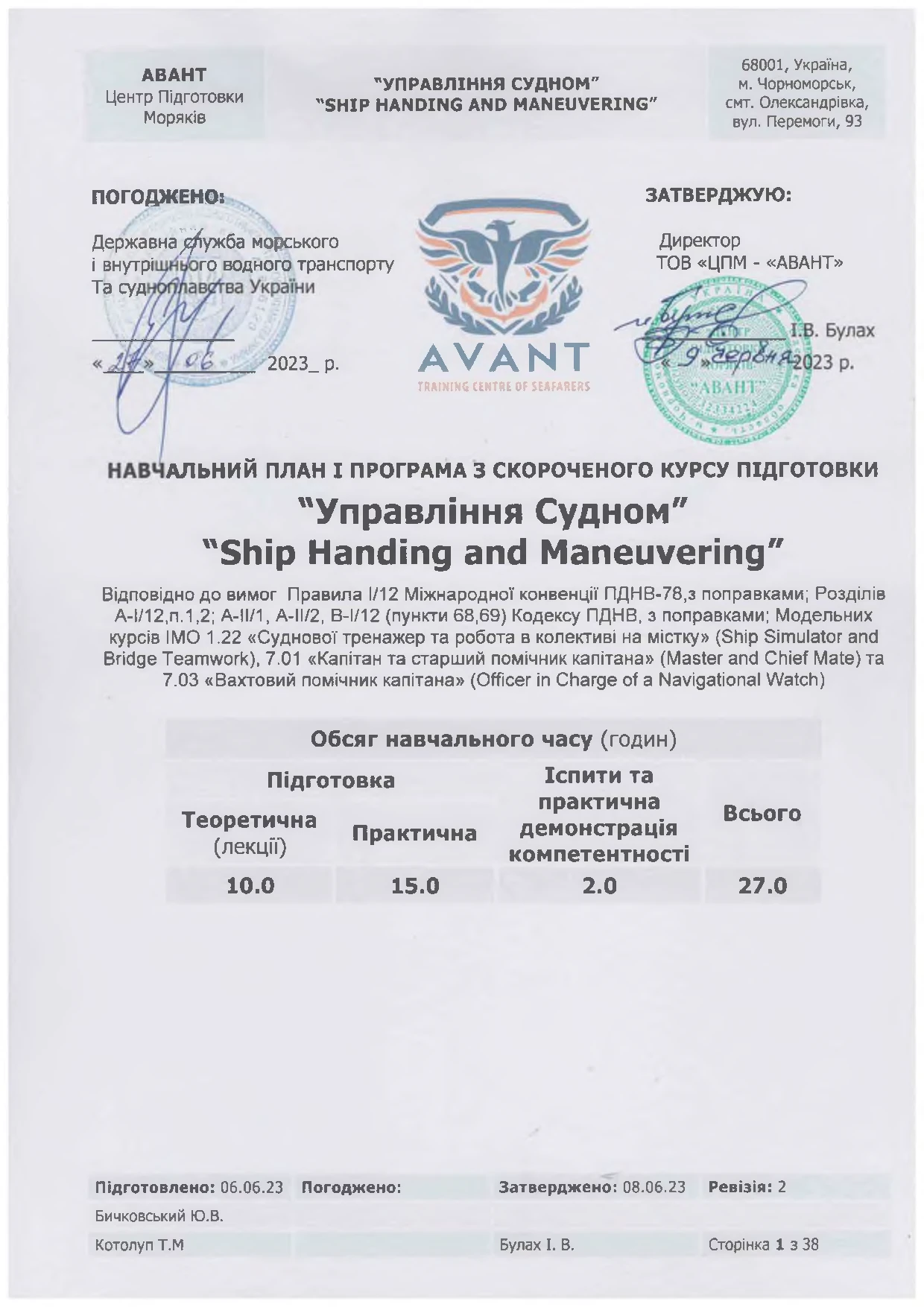
Course graduates must confirm their competence by successfully passing a final test and an interview with an instructor-teacher, ensuring objective assessment of acquired knowledge and practical skills. Successful course completion entitles you to receive a "Ship Handling and Manoeuvring" certificate recognized by maritime administrations of Ukraine, Panama, Dominican Republic, Republic of the Marshall Islands, and other flag states. This certificate confirms your ship handling qualification and is an important addition to a maritime officer's professional portfolio. We recommend taking detailed notes on the modules during training or using our module presentation materials for better retention of the extensive practical information and successful test completion.
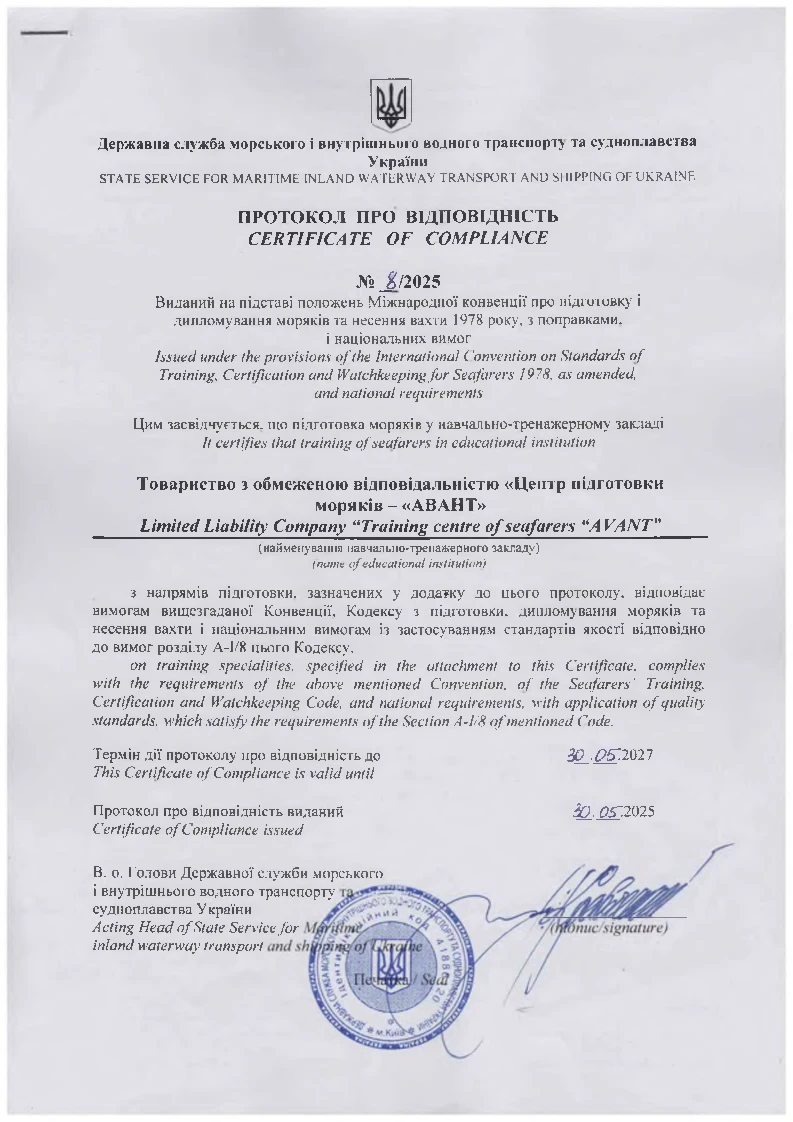
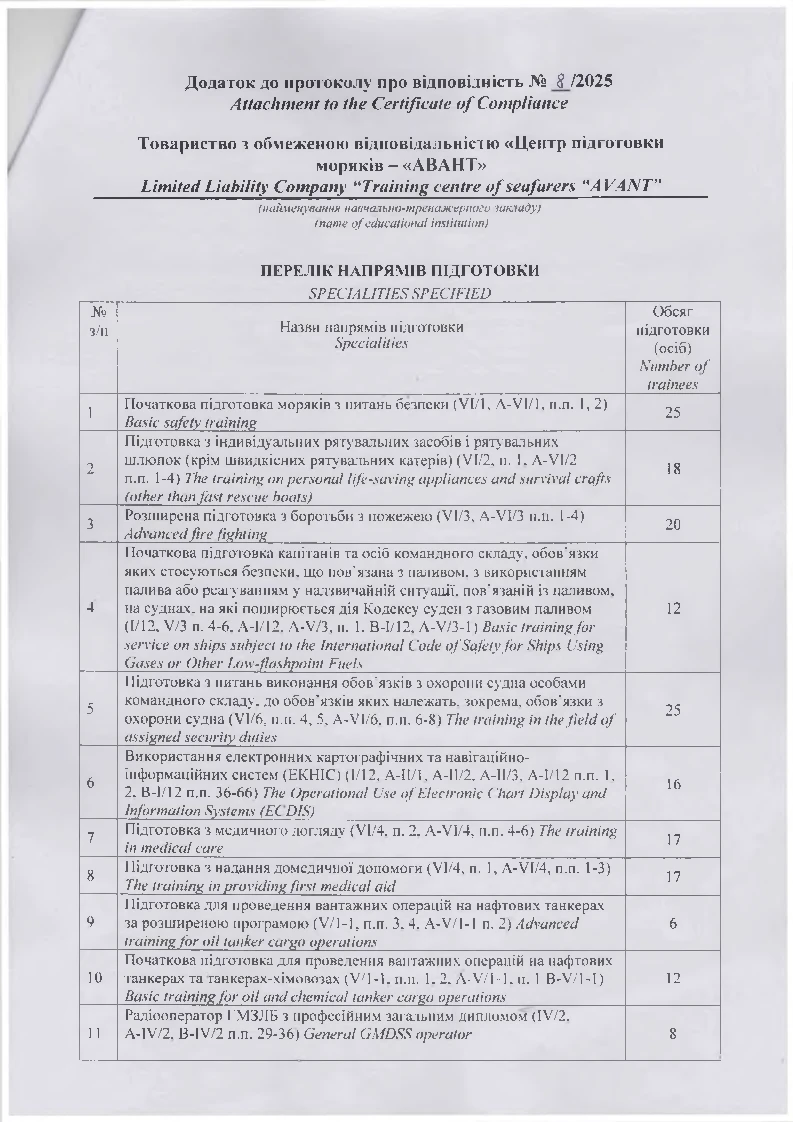
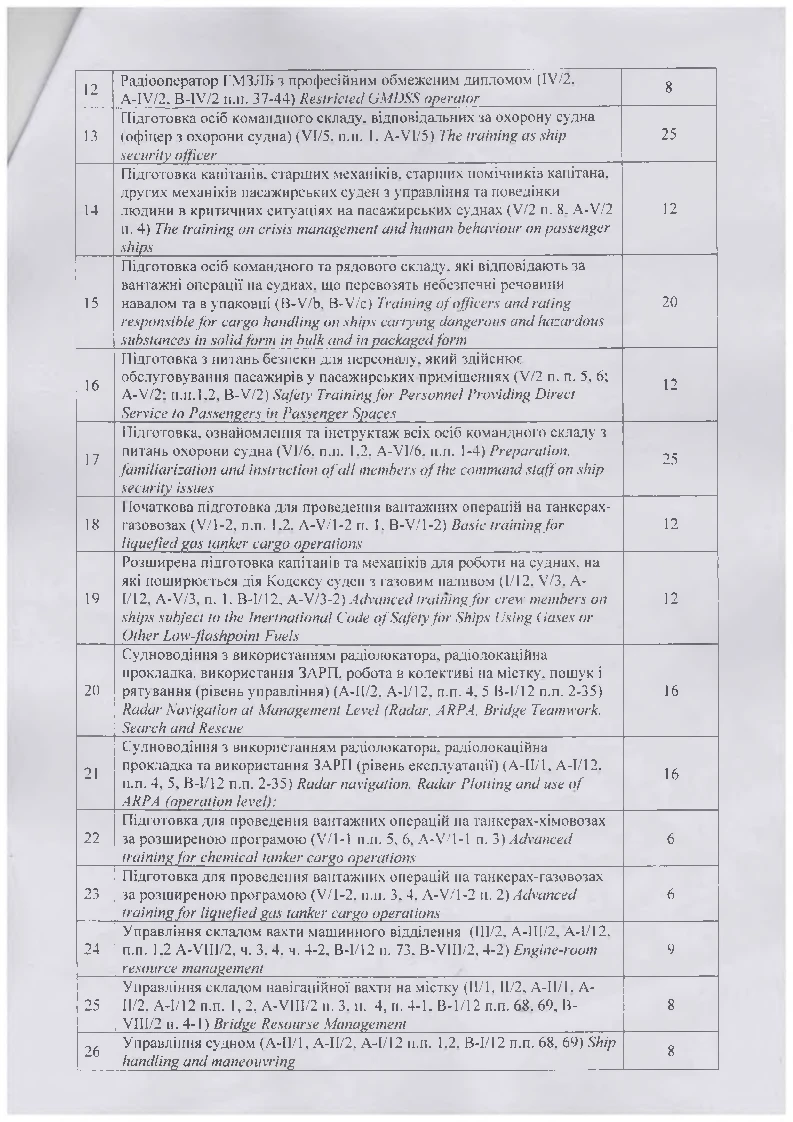
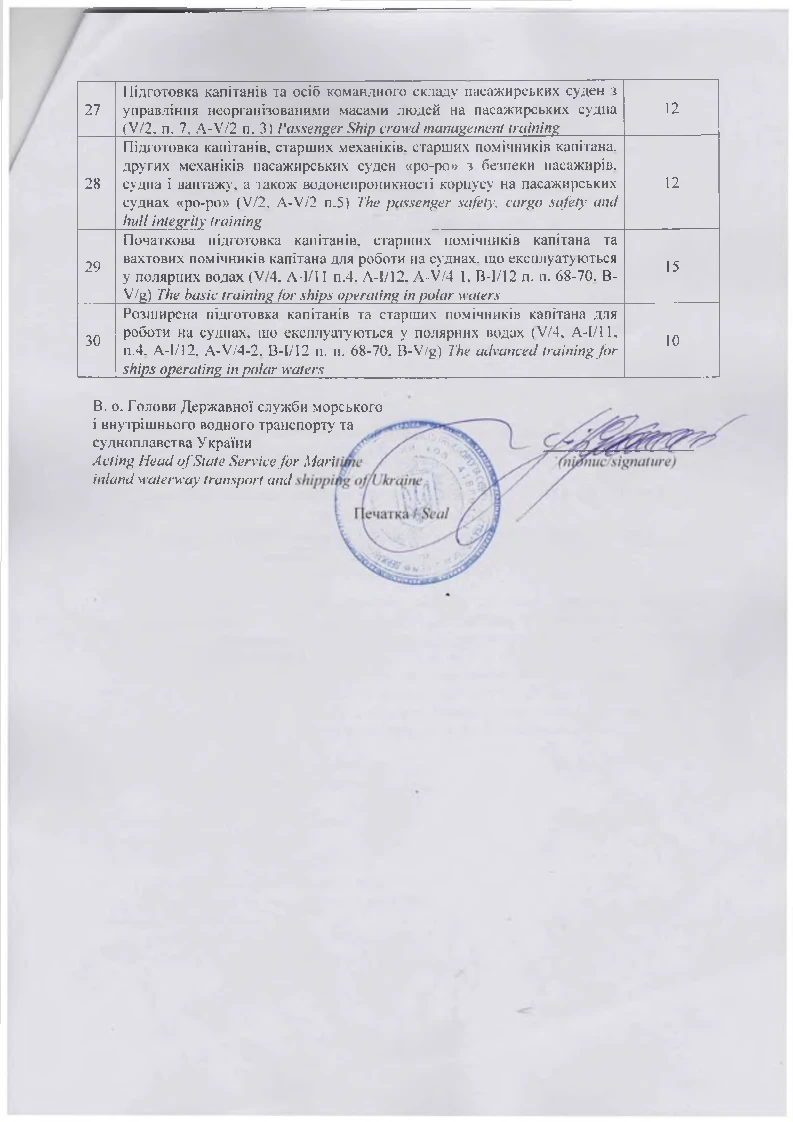
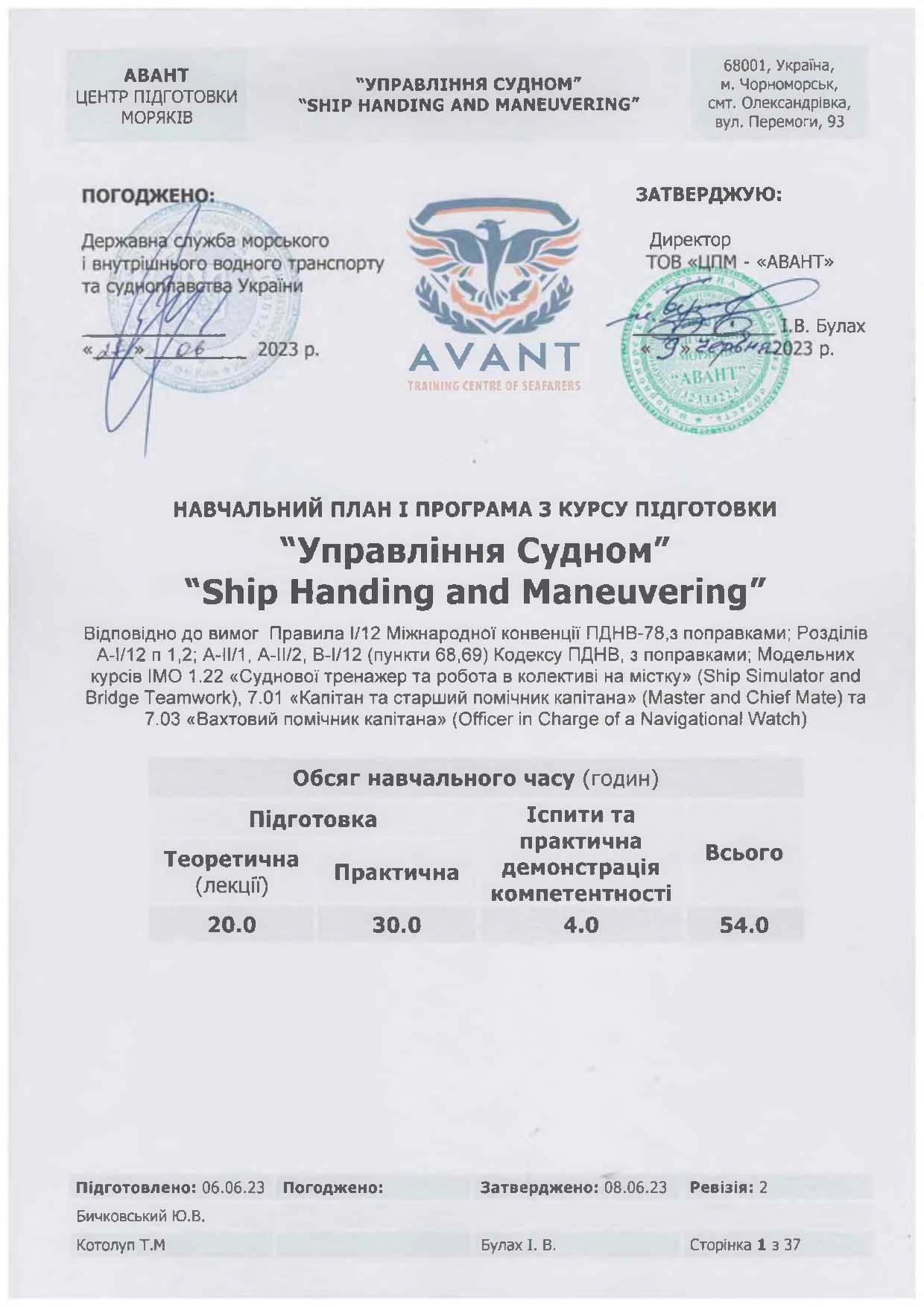
Certificate samples